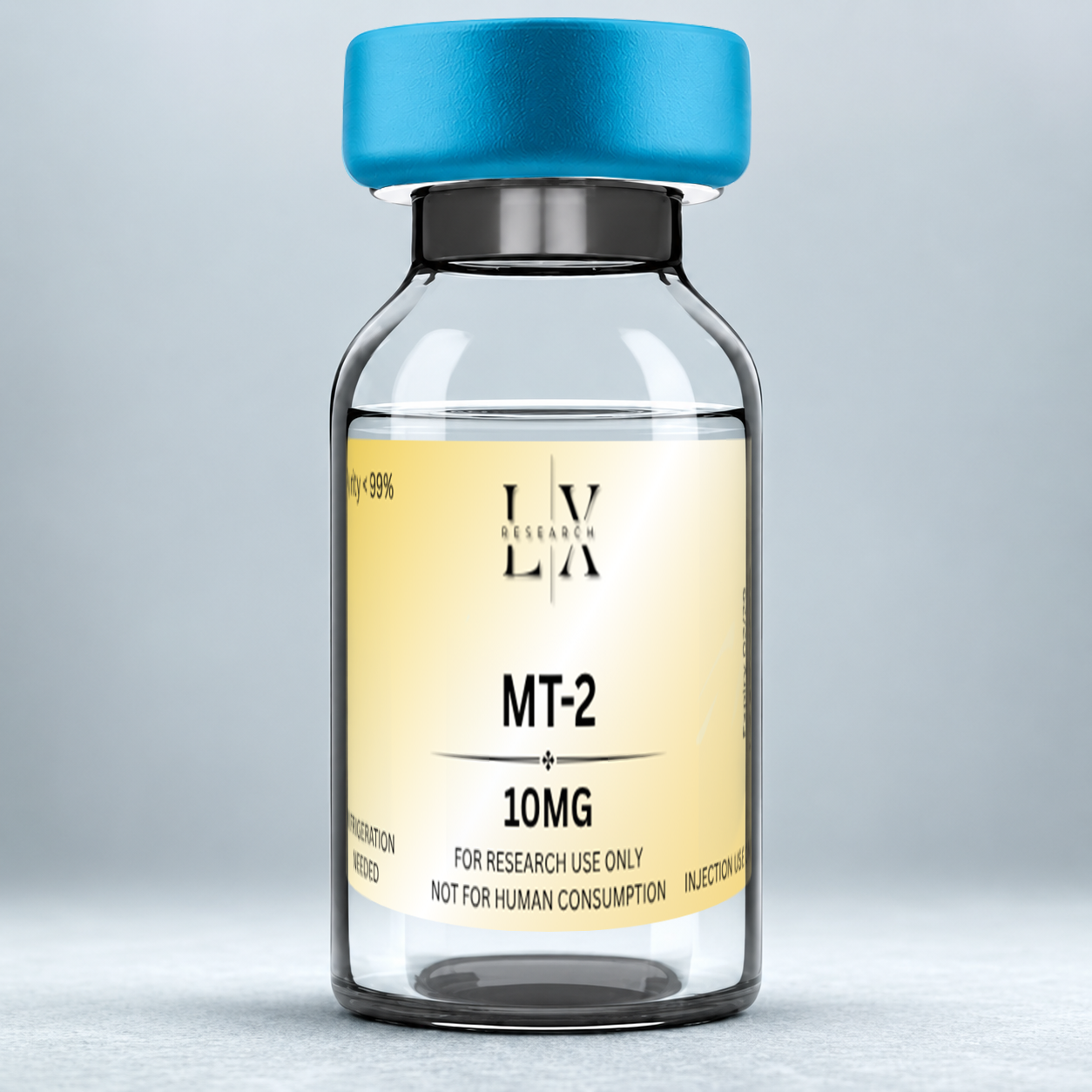
COMES IN LYOPHILIZED POWDER FORM, BACTERIOSTATIC WATER NEEDED TO RECONSTITUTE
Melanotan II is a synthetic melanocortin peptide analog that exhibits thermogenic, anti-inflammatory, and anti-atherosclerotic activities; it non-selectively binds melanocortin receptors. Melanotan II was originally designed to promote skin pigmentation, but has since been shown to induce arousal and increase body temperature in clinical settings and animal models. Melanotan II also decreases fluorodeoxyglucose uptake in atherosclerotic plaques, decreases pro-inflammatory cytokine levels, and increases aortic vasorelaxation in animal models of atherosclerosis.
Melanotan II is a synthetic analogue of the peptide hormone α-melanocyte-stimulating hormone (α-MSH) that stimulates melanogenesis to facilitate tanning. It may also increase sexual arousal.
It was developed as a successor to afamelanotide (“Melanotan I”), an FDA approved drug operating through a similar pathway. Clinuvel Pharmaceuticals intended to offer it as a cosmetic, but abandoned this pursuit in the 2000s due to regulatory restrictions and concerns about the promotion of suntanning. Unlicensed Melanotan II is found on the internet, although health agencies advise against its use due to legality and a lack of testing.
Melanotan-II may cause reversible darkening of moles and freckles. It is unclear if Melanotan II can increase (or reduce) the risk of developing melanoma, because reports of melanomas associated with its use have coincided with heavy UV exposure and sun bed use. A 2013 scientific review found there was no conclusive evidence it causes melanoma, and a 2021 review concluded “the increased risk of melanoma in Melanotan users, who use it for tanning and exhibit sun-seeking behaviour, can probably be explained by more UV exposure”.Side effects may include facial flushing, nausea and erection in males.